Bhagavad Gita Chapter 10: Vibhuti Yoga
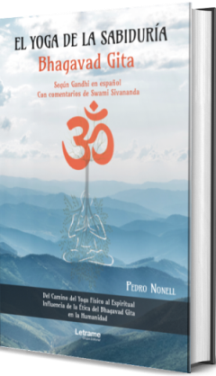
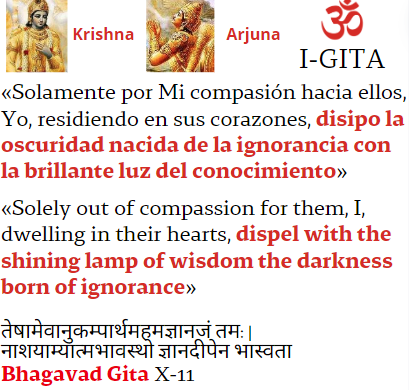
Chapter 10 of the Bhagavad Gita - The Yoga of Divine Glories (Vibhuti Yoga) Spanish / English /Hindi
Welcome to this academic study guide on Chapter 10 of the Bhagavad Gita, traditionally designated as Vibhuti Yoga, or the Yoga of Divine Glories. In this beautiful and expansive text, the dialogue between Sri Krishna and Arjuna moves from hidden principles to visible expressions, showing seekers how the Supreme Lord projects Himself across the vast cosmos.
Guided by the insights of Pedro Nonell—a dedicated commentator on Advaita Vedanta, , and Swami Vivekananda—this page maps out the divine markers that reveal the underlying spirit in all things.
By identifying His presence in the finest, strongest, and brightest aspects of creation, Chapter 10 provides a natural bridge between loving devotion (Bhakti) and clear knowledge (Jnana). This section teaches seekers to look at the universe with a sense of wonder, showing that everything around us is a step toward realization and deep inner peace.
The Infinite Glories & Manifestations of the Divine
In this chapter, Sri Krishna explains to Arjuna the Divine Glories of the Lord, that is, how He projects Himself as the entire universe.
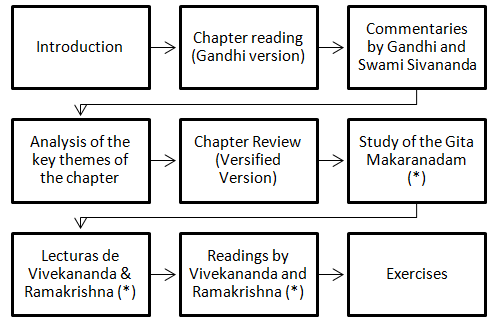
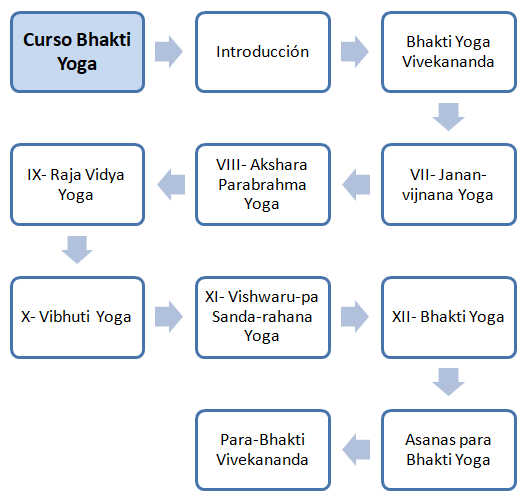
Subject Syllabus:
- Introduction and summary of Chapter 10- The Yoga of Divine Glories
- Chapter reading Yoga of Divine Glories (Gandhi's Gita, Sivananda):
- Key topics:
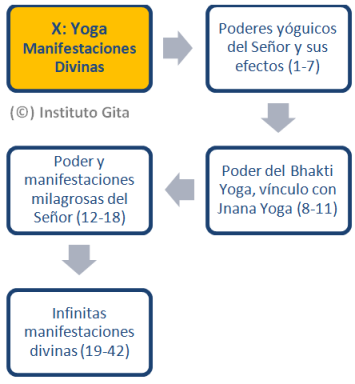
- Verses: 1-7: Human attributes that come from the yoga of the Lord (Brahman)
- Verses 8-11: Power of Bhakti Yoga and its link with Jnana Yoga
- Verses 12-18: Manifestations of the Lord in the universe
- Verses 19-42: The infinite Divine Glories
- Reading the versified version of this chapter
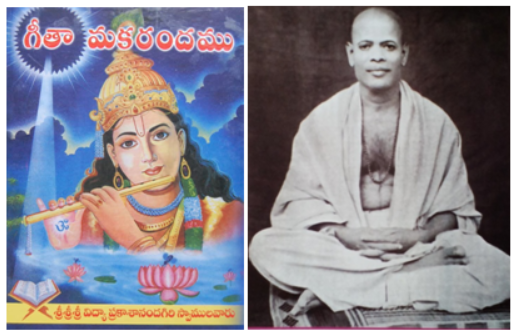
- Analysis of each verse and its comments from chapter 10 (Gita Makaranadam by )
- Swami Vivekananda Readings related to the Yoga of Divine Glories
- Exercises of Chapter 10- Vibhuti Yoga
Summary
In the previous three chapters of the Bhagavad Gita, Sri Krishna had explained to Arjuna some of the characteristics of Brahman:
- Chapter 7- the Yoga of Knowledge and Realization of Brahman (Jnanavijnana Yoga)
- Chapter 8- the Yoga of the Imperishable Parabrahman (Brahma Yoga)
- Chapter 9- The Yoga of Royal and Discriminatory Knowledge (Rajavidya-rajaguhya Yoga)
The great sages (Rishis, swamis) fail to understand this projection:
“Sri Krishna: Neither the gods nor the great wise men know My origin; because, in all aspects, I am the source of the gods and the great sages (Rishis)” Bhagavad Gita 10.2
If we are able to Know Him as the “great Lord of the worlds”, we will free ourselves from deception and sin:
“Sri Krishna: He who knows Me among mortals as the unborn, without beginning and as the Supreme Lord of the universe, he is free from the deceived and freed from all evils.” Bhagavad Gita 10.3.
For :
“As the Supreme Person is the cause of all worlds, it has no beginning. Since He is the source of all gods and great sages, there is no source for His own existence. Since He has no beginning, He is not born. He is the great Lord of all worlds.” Swami Sivananda.
In the following verses Sri Krishna described the main qualities of beings that exclusively have their origin in Him, such as:
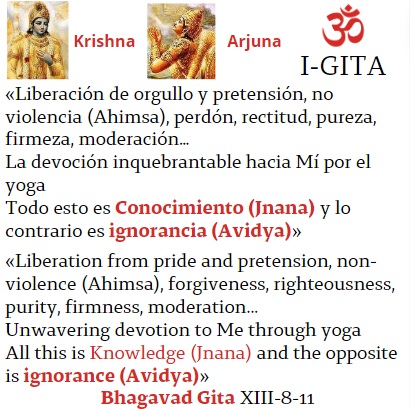
When we know His immanence and His Yoga: we will be endowed with “unbreakable Yoga” (Bhagavad Gita) and the wise man who understands that He is the “source of everything” will worship Him “with his heart full of Devotion” (Bhakti):
“Sri Krishna: I am the origin of all creation. Everything comes from Me. The wise man who knows this perfectly worships Me with great faith and devotion” Bhagavad Gita 10.9.
And Sri Krishna transmits this beautiful principle: “teaching one another.”
Swami Sivananda titled this chapter as “The Yoga of Divine Glories.”
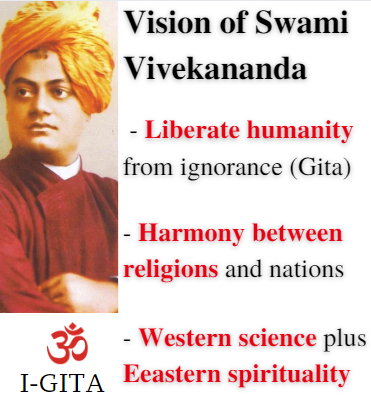
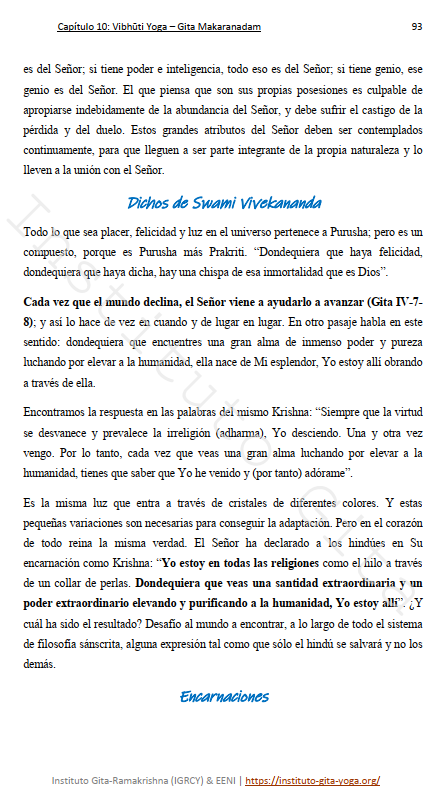
Commentary by Swami Vivekananda on verse 32 of Chapter 10 of the Bhagavad Gita.
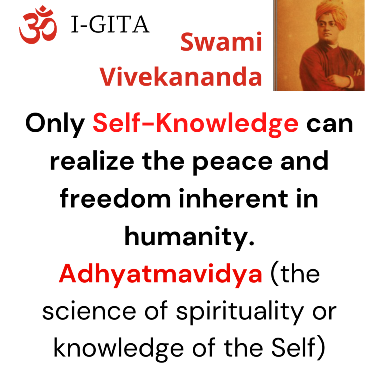
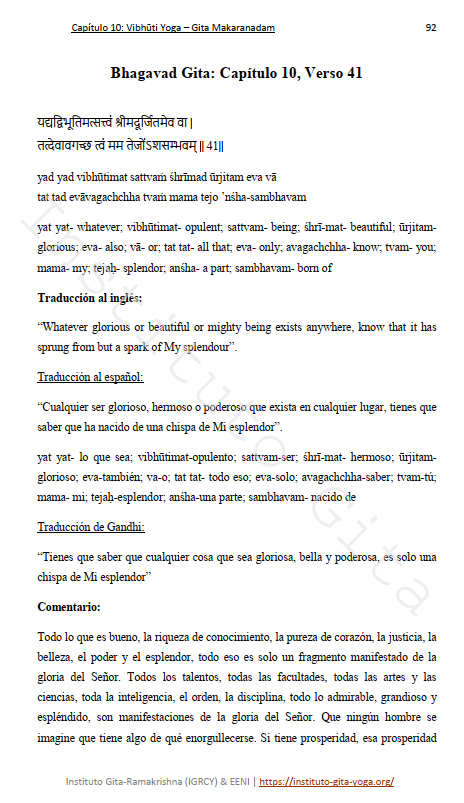
“Of all created things, I am the beginning, the end and the middle, Ο Arjuna. Of all the sciences, I am the Science of Being (of spirituality), and in debates I am the reason” Bhagavad Gita 10.32”
Adhyatmavidya (the science of spirituality or knowledge of the Self)
We see that the modern world has made great advances in all sciences and yet
it has not brought peace to the countries.
Any rational thinker would naturally come to the conclusion that modern
scientific achievements are not sufficient to bring peace and happiness to humanity.
Only Self-Knowledge can realize the peace and freedom inherent in humanity.
Swami Vivekananda
Frequently Asked Questions (FAQs)
What is the primary focus of Bhagavad Gita Chapter 10?
The primary focus is Vibhuti Yoga, which details how the Divine Supreme Spirit manifests as the very source, core essence, and vital power of everything across the created universe.
How does Vibhuti Yoga connect Bhakti Yoga with Jnana Yoga?
It connects them by showing that the infinite expressions of nature are parts of a single Divine Source. This understanding allows a seeker to transform intellectual knowledge (Jnana) into deep, heartfelt devotion (Bhakti).
What is meant by the term Adhyatmavidya in this chapter?
Adhyatmavidya is the Science of Being or spiritual knowledge of the true Self. Swami Vivekananda noted that while physical sciences improve our outer conditions, only this inner science can bring lasting peace and true freedom to humanity.
Why does Sri Krishna describe Himself as the beginning, middle, and end of all things?
By describing Himself as the beginning, middle, and end, Sri Krishna reminds us of His immanent and transcendent nature. He is the material cause and supporting reality of all existence.
Conclusion
In conclusion, Chapter 10 of the Bhagavad Gita helps us see the world through a spiritual lens. Sri Krishna shows Arjuna that we do not need to look away from the world to find the Divine; instead, we can learn to perceive the Supreme Source in every expression of beauty, power, and wisdom.
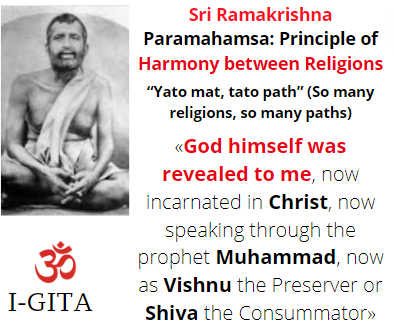
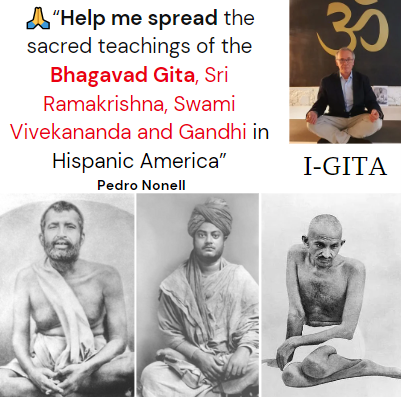
Through the translations and commentaries of Pedro Nonell, it becomes clear that realizing this omnipresence inspires true, unshakeable devotion. By embracing the profound perspectives of Swami Vivekananda and Sri Ramakrishna, we come to realize that studying our inner nature helps us look past surface differences, anchoring our lives in a deep sense of universal connection, clarity, and lasting inner peace.
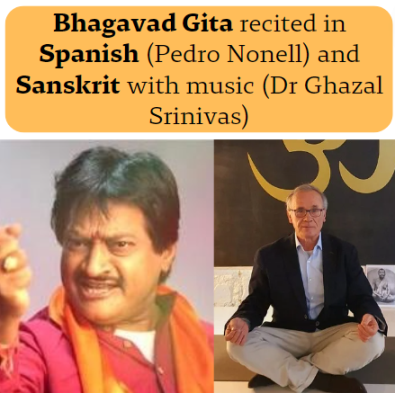
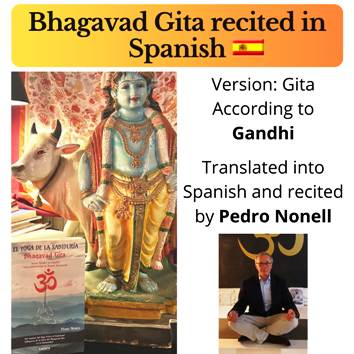
Bhagavad Gita recited in Spanish (Pedro Nonell) and Sanskrit (Dr Ghazal Srinivas)
 Yoga de las Manifestaciones Divinas Bhagavad Gita
 Ioga das Manifestações Divinas.
Listen to the video of Pedro Nonell with English subtitles

(c) Gita Institute & Pedro Nonell